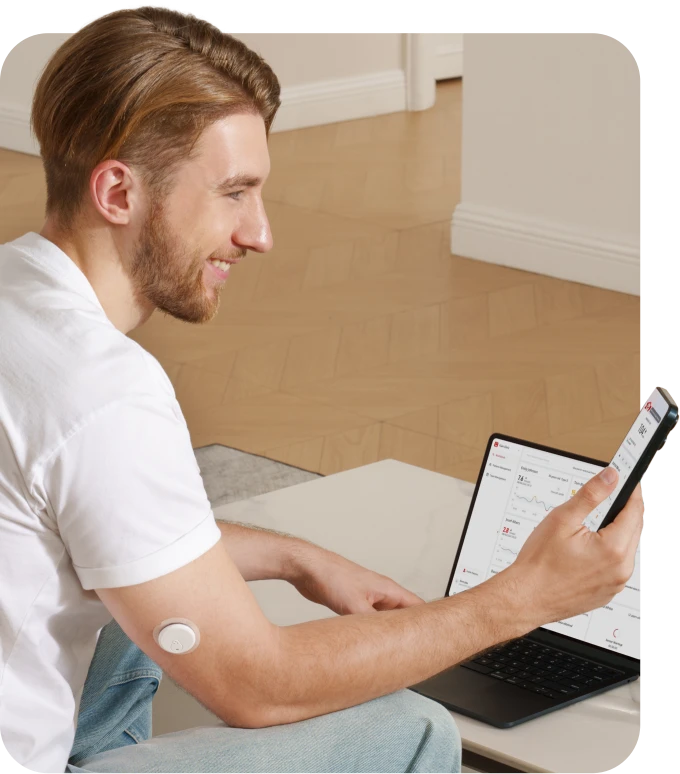
A practical way to evaluate CGM sensors in 2026 is to look beyond one headline specification. Useful comparisons combine accuracy, wear duration, sampling frequency, connectivity, alerts, size, water resistance, and app functions. For people assessing iCan CGM, these features show how sensor technology can support practical daily monitoring.
Accuracy Remains the Starting Point
Accuracy is one of the first specifications buyers examine because CGM data are used to understand glucose patterns and changes. MARD, or mean absolute relative difference, is a common statistical measure of CGM accuracy. However, it should be read with the conditions behind it, including wear duration, sensor location, study population, and reference measurements.
The iCan i3 user guide describes a clinical study involving 60 adults with type 1 or type 2 diabetes and reports an overall MARD of 8.71%. Participants wore the device for up to 15 days on the abdomen, while venous glucose was measured with a laboratory reference method during clinical sessions. This context shows that an accuracy figure is tied to a defined evaluation method rather than being universal for every situation.
Longer Wear Can Reduce Routine Interruptions
Wear duration is another major consideration. Replacing a sensor less often can reduce application sessions and make continuous monitoring easier to maintain.
The iCan i3 is specified for 15 days of wear. The system is designed to generate readings every three minutes and provide real-time connectivity. Together, these functions provide regular glucose readings without requiring users to repeatedly interact with the sensor to view current information.
Longer wear does not automatically mean better performance. Adhesive, insertion, sensor stability, and user instructions all need to support the intended wear period. A useful evaluation considers how the sensor performs from the beginning through its final days.
Sampling Frequency Shapes the Value of Trends
CGM can offer more insight than occasional measurements because it records repeated data throughout the day and night. Sampling frequency affects how detailed the glucose curve becomes and how easily users can observe changes around meals, exercise, sleep, and other daily events.
The iCan i3 provides glucose readings every three minutes. Its app records these readings and provides trend and daily average graphs. Sinocare also presents the iCan platform within its broader diabetes-management portfolio, connecting continuous sensing with digital tools for reviewing glucose information.
Frequent readings can create a more continuous monitoring record. Interpretation should still follow product instructions and professional medical advice.
Alerts Should Be Practical, Not Merely Available
High and low glucose alerts can make continuous monitoring more actionable by drawing attention to values that cross support thresholds. Good alert design requires clear notifications and reliable delivery through the connected device.
The iCan app supports customizable low and high glucose alerts and records alert information. Its user guide explains that alerts can appear through visual notifications, vibration, or sound depending on mobile-device settings. This makes the app and phone configuration part of the real-world monitoring experience.
Physical Design Still Matters
A CGM sensor is worn on the body, so physical characteristics influence comfort and everyday practicality. Smaller dimensions and lower weight can help the device remain less noticeable under clothing and during movement.
The iCan i3 is listed at 32 mm by 5.7 mm and weighs 6 g. Its official product page also gives an IP28 water-resistance rating, stating that it can withstand immersion in 2.5 meters of water for up to two hours.
These features matter when comparing devices intended for extended wear. Comfort, attachment, clothing contact, and permitted water exposure should be considered together.
App Connectivity Can Reduce User Effort
Real-time connectivity matters because a sensor creates more value when its data are easy to access. The iCan app provides current readings, trend arrows, glucose graphs, event recording, customizable alerts, and reports including AGP and time-in-range information.
The app supports scan-free Bluetooth connectivity and event recording for food, exercise, insulin, and medication. This supports a more contextual view of glucose changes rather than isolated numbers.
From a product-development perspective, Sinocare combines wearable glucose sensing with digital diabetes-management functions, allowing the sensor and software experience to work as a connected system.
How Should Buyers Compare CGM Features?
A practical CGM sensor comparison should ask the same questions across products: What is the documented accuracy? How long does the sensor last? How often are readings generated? What alerts are supported? How large and heavy is the wearable? What water-resistance conditions apply? How does the app handle real-time data and reports?
The conditions behind each specification also matter. A 15-day wear claim should be considered with placement instructions and operating limitations. An accuracy figure should be interpreted alongside its study population and reference method. Sinocare’s published iCan i3 information provides these specifications as concrete data points rather than relying only on general product descriptions.
Choosing Features That Matter in Daily Use
A CGM should not be evaluated by a single specification alone. Accuracy is a key evaluation factor, while wear time, sampling frequency, alerts, connectivity, physical design, and water resistance influence everyday use.
When comparing CGM systems in 2026, buyers can evaluate these characteristics together with the intended users and conditions of use. Sinocare’s iCan portfolio brings together continuous sensing, mobile connectivity, trend visualization, and wearable design around daily glucose management. Buyers can then compare documented features with the needs of intended users and the conditions in which the device will be worn.