Choosing a prototyping process is not simply a matter of selecting the fastest manufacturing method. The right process depends on what the prototype needs to prove. A concept model may only require visual confirmation, while a functional product may need accurate dimensions, realistic mechanical performance, production grade materials, or injection molded surfaces.
Three common options are 3D printing, CNC machining, and rapid prototype tooling. Each serves a different stage of product development. Understanding where each method fits can help engineering teams control development costs while obtaining more meaningful test results.
When 3D Printing Makes More Sense
3D printing is often a practical starting point when the primary objective is to verify shape, proportions, assembly concepts, or basic geometry. Because parts can be produced directly from digital models without conventional tooling, design changes can be introduced relatively quickly.
This makes additive manufacturing useful when a project is still evolving. A team can evaluate the physical size of a housing, check whether components fit together, or review the ergonomics of a new enclosure before investing in machining or molds.
However, a 3D printed part does not necessarily reproduce the characteristics of an injection molded component. Layer structure, anisotropy, surface texture, density, and material behavior can differ from the final production process. If the prototype needs to represent injection molded performance, another manufacturing route may provide more relevant results.
When CNC Machining Is the Better Option
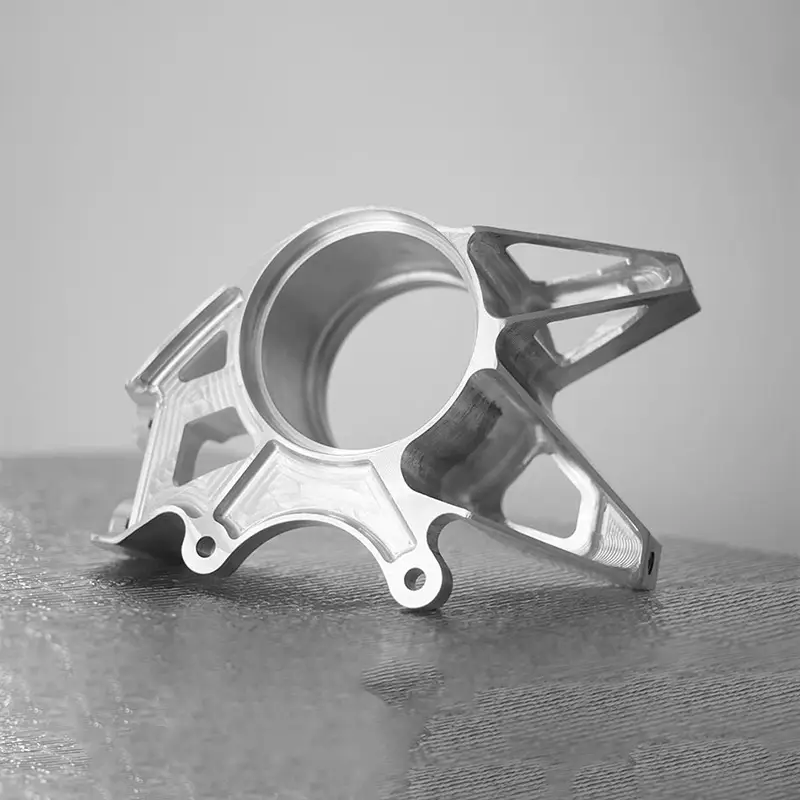
CNC machining becomes attractive when dimensional accuracy, material flexibility, or a small number of functional parts is the priority. A solid block of plastic or metal can be machined directly according to the CAD model, eliminating the need to manufacture an injection mold.
This makes CNC particularly useful for early functional prototypes, metal components, fixtures, housings, and parts where only a few samples are required. HordRT provides CNC milling, turning, EDM, wire cutting, and surface grinding, with 3 axis, 4 axis, and 5 axis machining capabilities for complex components.
CNC machining also provides access to engineering materials that may be difficult to reproduce through some additive processes. Yet the economics change as quantities increase. Machining every individual plastic part can require substantial machine time, especially when the geometry contains deep cavities, complex internal features, or significant material removal.
When the objective shifts from making a few prototypes to evaluating injection molded parts in meaningful quantities, rapid prototype tooling becomes worth considering.
When Rapid Prototype Tooling Becomes the Right Choice
Rapid prototype tooling is particularly useful when the product needs to be tested through the same basic manufacturing process expected for production. Instead of producing the part directly through additive manufacturing or machining, a simplified injection mold is created and used to produce multiple molded components.
This distinction matters because the prototype can use the intended production grade thermoplastic and injection molding process. HordRT describes prototype tooling as a method for evaluating part geometry, material performance, assembly fit, and functional behavior before committing to full scale production tooling.
For example, if a plastic enclosure contains ribs, bosses, snap fits, textured surfaces, or thin walls, an injection molded prototype can reveal issues that may not appear in a machined or printed version. Filling behavior, sink marks, warpage, ejection, surface appearance, and assembly fit can all be evaluated under more representative conditions.
Consider Quantity Before Choosing the Process
Prototype quantity is one of the clearest factors separating these processes.
For one or two visual models, 3D printing may be sufficient. For several highly accurate functional components, CNC machining can provide a practical route without tooling investment. Once the project requires dozens, hundreds, or more molded plastic parts, the economics and technical requirements can shift toward rapid prototype tooling.
The mold does introduce an upfront cost, but that investment is spread across multiple molded parts. HordRT offers aluminum prototype molds, soft steel tooling, shared MUD mold inserts, and single or multi cavity configurations. These options allow the tooling structure to be matched to expected quantity, testing requirements, part complexity, and future production plans.
Material Realism Can Change the Decision
Material selection is another important consideration.
A prototype made from a material that behaves differently from the intended production resin may provide incomplete information about the finished product. This can become particularly important for mechanical testing, heat resistance, dimensional stability, impact performance, surface appearance, and assembly validation.
Rapid prototype tooling allows production grade thermoplastics to be molded into the actual part geometry. HordRT lists materials including ABS, PP, PE, PC, PC/ABS, PA, POM, PBT, PMMA, TPE, TPU, and glass filled PA among its available material options.
When material performance is part of the validation objective, producing a molded prototype from the intended resin can provide more relevant information than evaluating a visually similar printed or machined substitute.
Complexity and Tooling Strategy Matter
Part geometry can also determine which method is practical. A simple enclosure may be straightforward to print or machine, while a component with deep cores, undercuts, ribs, bosses, thin walls, and multiple cosmetic surfaces can become increasingly difficult to reproduce efficiently through CNC.
Rapid prototype tooling addresses these challenges through dedicated mold design. HordRT reviews part geometry, material, expected quantity, parting lines, gates, cooling, ejection, and mold structure before manufacturing. Its tooling process includes CNC machining, EDM, grinding, fitting, mold assembly, and T0 trial molding.
This engineering review is important because prototype tooling is not simply a faster version of conventional mold manufacturing. The tool structure must be optimized around the intended validation objectives while leaving room for practical adjustments.
Why HordRT Is Useful When the Process Needs to Evolve
One advantage of working with HordRT is that the company offers several prototyping processes rather than limiting a project to one manufacturing method. Its rapid prototyping services include CNC machining, injection molding, sheet metal fabrication, urethane casting, and 3D printing.
This allows the manufacturing route to change as the product moves through development. A team may begin with a printed model for visual evaluation, move to CNC machining for functional checks, and then use rapid prototype tooling when injection molded material and production relevant geometry need to be validated.
HordRT also states that its rapid tooling projects can typically move from approved tooling design to molded parts within approximately 5 to 10 working days, depending on project requirements. Its services include DFM review, mold trials, dimensional inspection, and flexible tooling configurations.
Choosing the Prototype Method Around the Test Objective
The most suitable prototype process depends on what the part needs to prove.
3D printing is well suited to fast visual and geometric evaluation. CNC machining is useful when accurate, functional parts are needed in limited quantities or when machining a specific material is advantageous. Rapid prototype tooling becomes more relevant when the goal is to validate injection molded geometry, production grade material, assembly behavior, surface quality, or a larger quantity of functional parts.
The decision does not have to be limited to one process throughout the entire project. As design requirements become clearer, the prototype method can evolve with them. With DFM analysis, tooling, injection molding, CNC machining, and inspection capabilities available through one manufacturing workflow, HordRT provides a practical route for moving from early concepts toward production relevant validation.