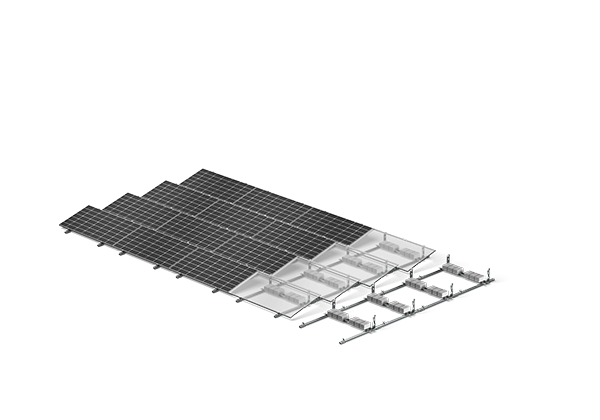
Evaluating supply chain dynamics reveals that intermediary markups frequently inflate total balance-of-system costs in commercial photovoltaic installations. Engineering teams and procurement managers face rising pressures to optimize capital expenditure without compromising structural integrity or material longevity. Establishing direct procurement channels with a verified roof solar mounting supplier can streamline logistics and potentially reduce unit costs for large-scale projects. Integrating specialized structural components from manufacturers like Antaisolar allows developers to lower balance-of-system budgets while maintaining rigorous engineering standards.
Multi-layered distribution channels introduce hidden fees, administrative markups, and extended lead times that complicate project scheduling. When purchasing through regional distributors, procurement departments absorb compounding margins that add no intrinsic physical value to the structural mounting hardware. Direct factory engagement bypasses these incremental cost layers, providing transparent pricing models aligned with raw material indices. This procurement efficiency allows commercial installers and project developers to allocate saved capital toward higher-density photovoltaic modules or advanced electrical infrastructure.
Understanding Intermediary Cost Structures in Commercial Photovoltaic Racking Procurement
Commercial photovoltaic supply chains historically relied on tiers of regional brokers, stockists, and local distributors to manage inventory. Each layer adds transportation handling fees, warehousing overhead, and profit margins that steadily increase the final cost per watt of mounting hardware. Procurement specialists analyzing these cost structures observe that distribution markups can significantly inflate total racking expenditure. Eliminating these intermediate transactions directly lowers raw equipment expenditure, optimizing budget allocation for utility and commercial projects.
Logistical delays present another significant financial risk associated with tiered distribution models. When projects experience design modifications or field adjustments, working through third-party vendors slows technical communication with factory engineering teams. Direct interaction with a primary manufacturing partner clarifies technical specifications quickly, preventing costly job-site downtime. Streamlined procurement pathways simplify order tracking, custom component fabrication, and delivery scheduling for time-sensitive commercial roof installations.
Structural Advantages of Proprietary High-Strength Aluminum Alloys
Raw material formulation plays a crucial role in balancing structural dead loads against environmental wind and snow forces. Standard aluminum racking systems frequently utilize standard 6005-T6 alloy profiles, which require thicker cross-sections to meet high mechanical load requirements. Thicker profiles add unnecessary weight to roof structures and increase raw material consumption, driving up transportation costs per megawatt. Advanced material engineering addresses this limitation by developing specialized alloy compositions with elevated yield and tensile strengths.
In-house metallurgical innovation allows specialized manufacturing facilities to produce proprietary alloys engineered for maximum structural efficiency. A qualified roof solar mounting supplier utilizes specialized alloy formulations to reduce total material volume without sacrificing mechanical load capacity. For instance, incorporating the ANTAI 6A22 aluminum alloy in T6 temper delivers a tensile strength of 300–335 MPa and a yield strength of 285–310 MPa. This enhanced strength profile permits leaner rail designs that lower shipping weight and ease manual handling on rooftop work sites.
Load Distribution Mechanics and Structural Efficiency on Commercial Roofs
Distributing mechanical forces effectively across commercial roof decking requires precise structural calculations and specialized rail profiles. Heavy snow accumulation and localized wind uplift create dynamic stress points that can deform subpar mounting hardware over time. High-performance aluminum alloys retain structural stiffness under peak environmental loading, preventing dynamic deflection that could compromise panel glass or junction boxes. Selecting suitable high-strength materials can support efficient rail designs, while attachment spacing should be determined by project-specific structural calculations.
Optimizing profile geometry alongside advanced material properties yields significant mechanical advantages for commercial rooftop installations. Utilizing high-strength alloys allows structural engineers to specify wider spans between mounting brackets, reducing roof attachment points and waterproofing labor. Systems fabricated from the ANTAI 6A22 alloy withstand severe environmental forces, including heavy snow loads and extreme wind uplift pressures. This structural efficiency optimizes component counts, streamlining installation timelines for EPC contractors.
Technical Synergies Between Custom Engineering and Direct Manufacturing
Direct factory engagement gives engineering teams access to customized structural solutions tailored to specific building geometries. Standard off-the-shelf mounting hardware often requires field modifications or additional adapter plates when encountering non-standard roof pitches or unique purlin spacings. Direct manufacturing collaboration allows custom-extruded profiles and pre-assembled clamps to be produced according to exact project blueprints. This tailored manufacturing approach minimizes job-site scrap, speeds up mounting operations, and reduces physical labor requirements.
Quality control standards remain far more consistent when sourcing directly from centralized extrusion and fabrication facilities. Factory-direct quality assurance protocols monitor alloy chemistry, anodization thickness, and mechanical tolerances at every stage of production. Third-party distribution chains, by contrast, often commingle components from multiple manufacturing sources, introducing variable tolerances that complicate assembly. Direct factory sourcing verifies component uniformity across large purchase orders, facilitating seamless fitment during field installation.
Long-Term Risk Mitigation Through Transparent Material Traceability
Traceability of raw materials and manufacturing processes forms a crucial aspect of risk mitigation for long-term solar asset performance. Commercial rooftop arrays must remain structurally sound for twenty-five years or more under continuous weathering. Direct factory procurement provides full documentation regarding mill test certificates, anodization standards, and mechanical stress evaluations. Transparency in material sourcing protects developers against substandard alloys that could undergo premature stress corrosion cracking or structural fatigue.
Understanding the exact metallurgical properties of specified mounting profiles enables precise engineering calculations for wind tunnel validation and local building code compliance. A verified roof solar mounting supplier provides comprehensive structural testing data, confirming that delivered hardware matches design assumptions. This level of documentation streamlines permit approval processes with local authorities having jurisdiction. Access to authentic factory certifications protects project equity by confirming that structural mounting hardware meets all mandated mechanical standards.
Financial Optimization Strategies for Large-Scale Rooftop Deployment
Strategic procurement decisions directly influence overall project profitability and return on investment for commercial solar assets. Lowering hardware acquisition costs through direct manufacturer sourcing decreases total capital expenditure without sacrificing structural design margins. These savings enhance financial metrics, improving internal rates of return for project owners and developers. Streamlined material acquisition also reduces procurement lead times, allowing commercial systems to begin generating clean energy ahead of schedule.
Consolidating procurement with an established primary producer simplifies long-term operations and maintenance logistics. Sourcing components directly from manufacturers like Antaisolar provides reliable access to matching replacement parts and technical support throughout the operational lifecycle of the array. Standardizing mounting hardware across multiple rooftop projects lowers inventory holding requirements for operations teams. Ultimately, direct factory procurement combines financial savings, material innovation, and structural reliability to support successful commercial solar investments.
Conclusion
Optimizing balance-of-system expenditures requires structural engineering rigor paired with smart supply chain management. By bypassing middleman markups, procurement managers obtain advanced structural solutions, such as high-strength aluminum profiles, at competitive price points. Partnering directly with a qualified roof solar mounting supplier provides project developers, EPC contractors, and installers with verified material quality, tailored technical support, and superior overall value for commercial rooftop installations.