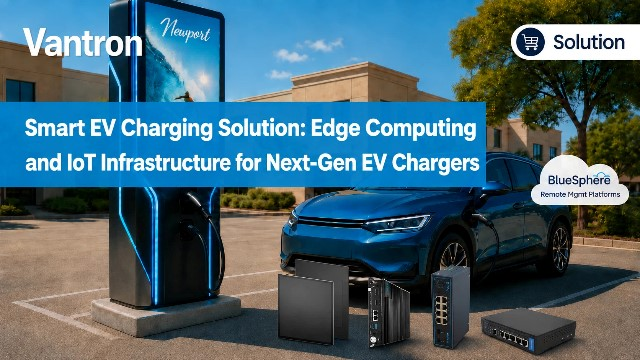
Electric vehicle charging networks are becoming distributed digital systems, not just power outlets. Operators must keep chargers connected, coordinate local devices, monitor faults, and support drivers across sites with different network and environmental conditions. Edge computing helps process data near each station while connecting equipment to centralized software. For charger manufacturers, system integrators, and network operators, this layer affects reliability, service costs, and scalability.
Why Charging Networks Need Computing at the Edge
A smart charging station brings together charging controllers, meters, battery management interfaces, displays, payment devices, sensors, and communications equipment. These components generate operational data and depend on timely exchanges with local controllers and backend services. Sending every event to the cloud before acting can add latency and expose routine tasks to network interruptions.
An edge computer provides local processing between field devices and the management platform. It can validate incoming data, coordinate peripherals, run local rules, and retain selected information during temporary connection loss. Critical safety and power-control functions must remain within certified charger control systems; edge hardware should complement those functions, not bypass them.
Keep Local Operations Responsive
Not every event requires a round trip to a remote server. A local computing layer can handle interface updates, device checks, data filtering, and selected diagnostic rules close to the charger. This reduces dependence on wide-area connectivity and helps operators distinguish equipment issues from backend or network problems.
AI workloads may also be useful at the edge when they match the computing budget and validation requirements. Local analysis, for example, can identify unusual temperature trends or repeated communication errors that deserve maintenance review. Such models should support—not replace—electrical protection and established fault-handling procedures.
When evaluating Smart EV Charging Solutions, engineering teams should assess processing capacity, support interfaces, operating temperature range, and expansion options together.
Connectivity Is Part of Architecture
Charging equipment may be installed in public car parks, workplaces, campuses, residential developments, or highway locations. Network conditions vary by site. A practical design may combine Ethernet with cellular or Wi-Fi, using failover where continued remote access is important. VPN support and network segmentation can help protect operational traffic.
Integrators should check interface counts, serial and Ethernet requirements, driver support, operating-system compatibility, and the protocols used by charger controllers and peripherals before hardware is selected. These checks are easier before enclosure and circuit designs are frozen than after a pilot begins. Sites need defined behavior for connection loss, data buffering, and recovery.
Design for Outdoor Reliability
Charging stations expose electronics to temperature swings, moisture, dust, vibration, and electromagnetic interference. Hardware selection should consider the entire installation, including thermal management, mounting, cable routing, and electrical noise. The rating of the charger enclosure does not automatically establish the environmental suitability of every internal component.
Industrial-grade embedded computers, displays, routers, and gateways can be suitable where long operating hours and stable behavior in difficult conditions are required. Buyers should check actual specifications, certifications, and operating limits rather than relying on the term “industrial” alone. Maintainability matters too: accessible service connections, clear fault indicators, documented recovery steps, and consistent configurations make fleet-level diagnosis easier.
Make Remote Management Actionable
A central platform is valuable when it turns station data into operational decisions. Useful functions include device-status monitoring, alarms, remote configuration, diagnostics, and controlled over-the-air software updates. These capabilities help service teams identify failing devices, prioritize site visits, and standardize changes without sending a technician for every routine task.
In practical EV charging station management, operators should define what data is collected, how often it is transmitted, how long it is retained, and who can change settings. Updates need authentication, version tracking, rollback planning, and staged deployment. A failed update should not leave a charger unusable or impossible to diagnose.
Local hardware should handle time-sensitive processing and peripheral communication; cloud services can support fleet visibility, reporting, policy management, and cross-site comparisons. This division keeps operations useful during connectivity problems while preserving centralized control as the network expands. Vantron’s published EV charging solution, for example, combines embedded computing, industrial connectivity, displays, and BlueSphere remote management.
Evaluating Total Cost, Not Just Hardware Price
The lowest initial unit price may not deliver the lowest lifetime cost. Buyers should consider integration work, enclosure modifications, software porting, field replacement, troubleshooting, and product availability. Stable component supply matters when charger models must remain in production or be serviced for years.
Ask vendors about development kits, drivers, BSP and operating-system support, documentation, customization boundaries, and remote debugging. Define responsibility for integration testing and how software or hardware revisions will be communicated. These details help engineering, procurement, and service teams compare proposals beyond processor specifications.
Scalability is also important. A pilot may include only a few chargers, while a commercial network can cover many sites with different backhaul and service requirements. Repeatable hardware configurations and consistent monitoring practices make expansion easier to validate and support. When assessing partners such as Vantron, buyers should confirm lifecycle commitments and integration support against the project’s actual requirements.
Building a Supportable Charging Network
Edge computing works best when designed as part of the entire charging system. Local processing, robust connectivity, industrial hardware, and centralized management solve different operational problems. Integration teams should test failure scenarios, update procedures, and recovery behavior before wider rollout.
With an industrial IoT portfolio spanning embedded computing, connectivity, displays, and device management, Vantron is one potential technology partner for teams evaluating this architecture. The right implementation depends on charger design, target sites, software requirements, and lifecycle plans. A clear specification helps businesses balance uptime, serviceability, deployment speed, and total cost as charging networks grow.